How to Make Looking After Grandchildren Easier
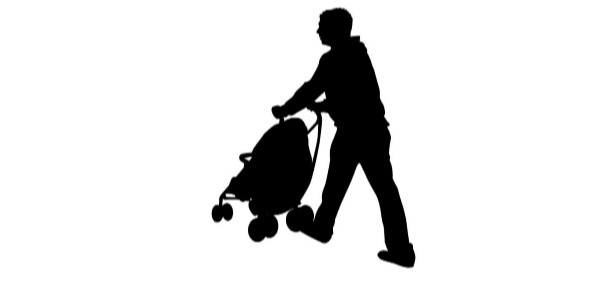
Anyone who is looking after grandchildren regularly know that they can feel heavier than they look. Especially when you add in all the paraphernalia that is required; the car seat, buggy, day bag etc.
You probably know the feeling of being exhausted after a day looking after them. I don’t have children but have helped look after friends’ children for the day and am always shattered afterwards. It is both mentally and physically challenging.
A lot of grandparents I see in clinic have the goal of being able to look after grandchildren for the day without having to worry about exacerbating a niggle in their knee, an ache in their back or a soreness in their shoulder.
The short answer: building targeted strength for the specific movements of childcare, lifting, carrying, bending, and keeping up with them, makes the physical side of looking after grandchildren feel dramatically easier, often within just a few weeks of consistent training. You don’t need to be able to lift heavy weights in a gym, you need to be strong and confident in the specific movements this post will show you below.
You want to have the option of doing any activity the little ones would like, not just to do the necessities. If they want to play, be carried, go to the park, etc you don’t want to have to worry about being physically capable.
SunLife research shows over half of UK grandparents provide childcare during the working week, saving families a combined £96bn a year. Given the rising cost of childcare, many of you will be helping out a day or two a week to keep costs down for your loved ones. Many of the grandparents I treat in this situation are terrified of letting their offspring down. They know that if they can’t look after the grandkids because of not feeling physically confident enough, that it will result in higher nursery fees.
New to Strength Training?
Grab my free strength training guide and get started with a clear, simple foundation, no gym experience needed.
How Strength Training Can Help?
It doesn’t have to be like that. Strength training can prepare your body for all these demands. But you need to go into it with a plan. To read more about understanding goal setting and planning, read my post on setting your strength training goals. You’ll need to think about the following steps…
- Identify what demands your body might go through in a day of child care.
- Work out how to recreate these movements in a controlled environment.
- Develop a program, using the right reps and sets for your goal, to increase the strength in said movements.
Each of these examples draws on one of the 7 functional movement patterns, the same building blocks I use with every client I train.
Lifting Grandchild Above Head
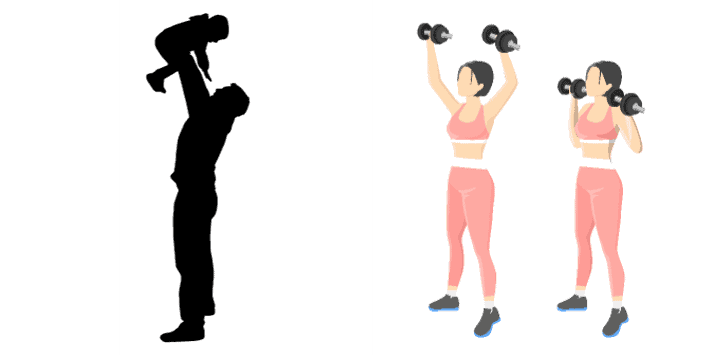
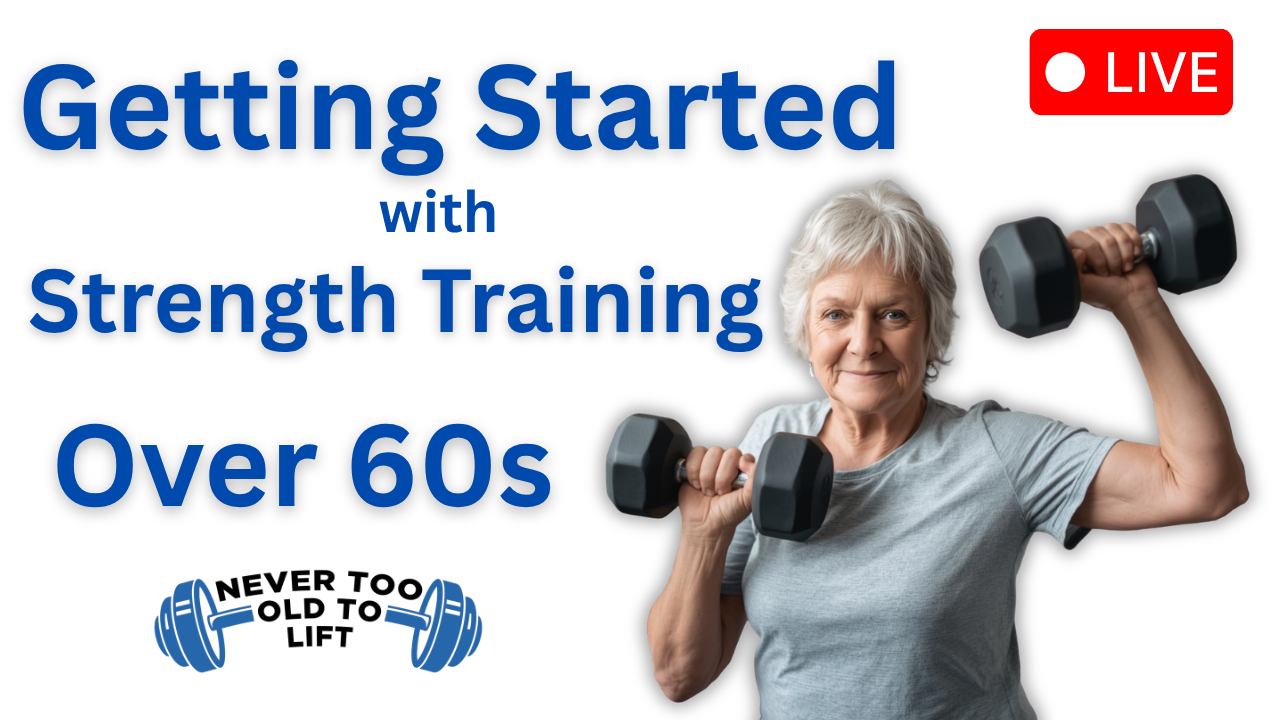
Start with a light dumbbell in each hand, held at shoulder height with your palms facing forward. Press both weights overhead until your arms are straight, then lower back to shoulder height with control. Aim for 3 sets of 10-12 reps, building the weight up gradually. Once you feel confident and strong through the full movement in the gym, that overhead lift with a wriggling toddler will feel far more manageable.
Carrying a heavy day bag, car seat etc
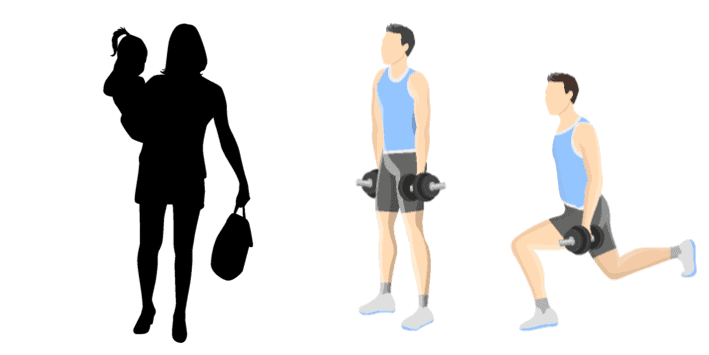
Hold a dumbbell in each hand, step forward into a lunge, lowering your back knee towards the floor, then push back up and repeat on the other leg. Start without weights if you’re new to this movement, then add light dumbbells once your balance and confidence improve. Aim for 3 sets of 8-10 lunges per leg. This builds the leg strength and stability you need to walk confidently while carrying an awkward, uneven load.
Standing up with grandchild on shoulders
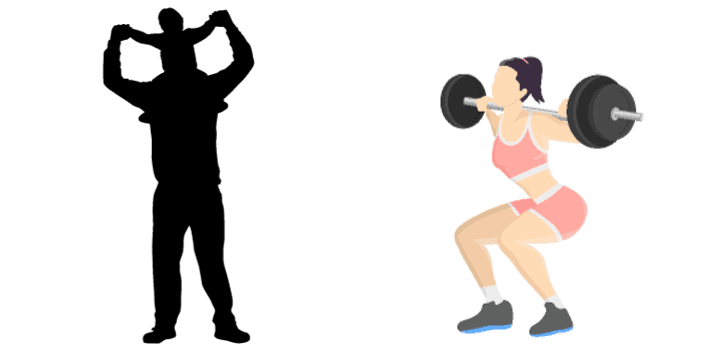
With a barbell or dumbbells for added resistance, or just your own bodyweight to begin with, lower yourself down as if sitting into a chair, keeping your chest up and knees tracking over your toes, then stand back up. Aim for 3 sets of 10-12 reps. This is one of the most useful exercises for this particular challenge, since standing up with extra weight on your shoulders is exactly what a squat trains.
Grandchild swinging from your arms
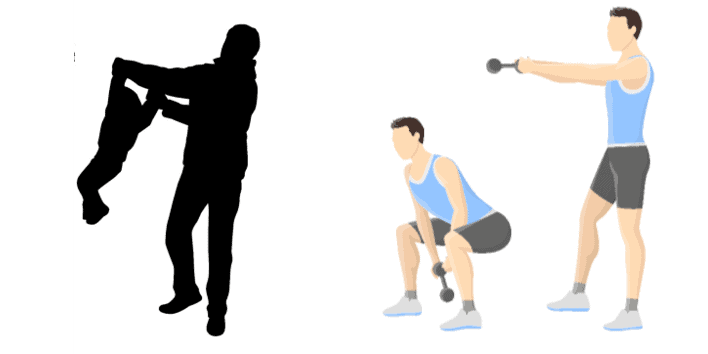
Hold a kettlebell with both hands, hinge at your hips (keeping your back straight) and swing the weight back between your legs, then drive your hips forward to swing it up to chest height. Aim for 3 sets of 12-15 swings, …starting with a light kettlebell (my guide on choosing one is worth a read if you don’t already have one) until your technique feels solid. This builds the grip strength and hip power needed to safely handle sudden, dynamic pulls on your arms.
Safety Note
As with any new exercise, it’s worth mastering these movements with light weight and good form in a controlled setting, this is the concept of load tolerance in action, before relying on them with the genuine unpredictability of a real child. If you have an existing back, shoulder, or knee issue, a physiotherapist can help you adapt any of these safely.
Other examples might be:
- Lifting your grandchild off the floor (Deadlift)
- Sitting down with child in front facing harness (Front Squat)
- Reaching/rotating to put child in car seat (Wood Chop)
Building strength in these movements that are required during an average day will result in the following:
- Looking after grandchildren feeling easier
- Feeling less tired at the end of the day
- Reduced risk of injury
- Enjoying the day rather than dreading it
Becoming stronger will also help prepare you for the other hidden physical challenges throughout the day. These include: being on your feet all day, long walks, short runs to catch up to them, getting up and down from the floor.
Homework:
- Start to identify the movements that you do when you’re with your grandchildren.
- Write down the movements that you particularly find difficult.
- If you feel comfortable to, comment below with some other ideas of movements that you need to be able to perform.
- Then try to think of an exercise you could do to replicate this. It might just help someone else with some ideas.
Want Support Along the Way?
Join Stronger for Life for weekly group calls, form feedback, and a community that understands what it’s like to start strength training later in life.