Resistance Band Door Anchor Setup: Safety & 5 Exercises
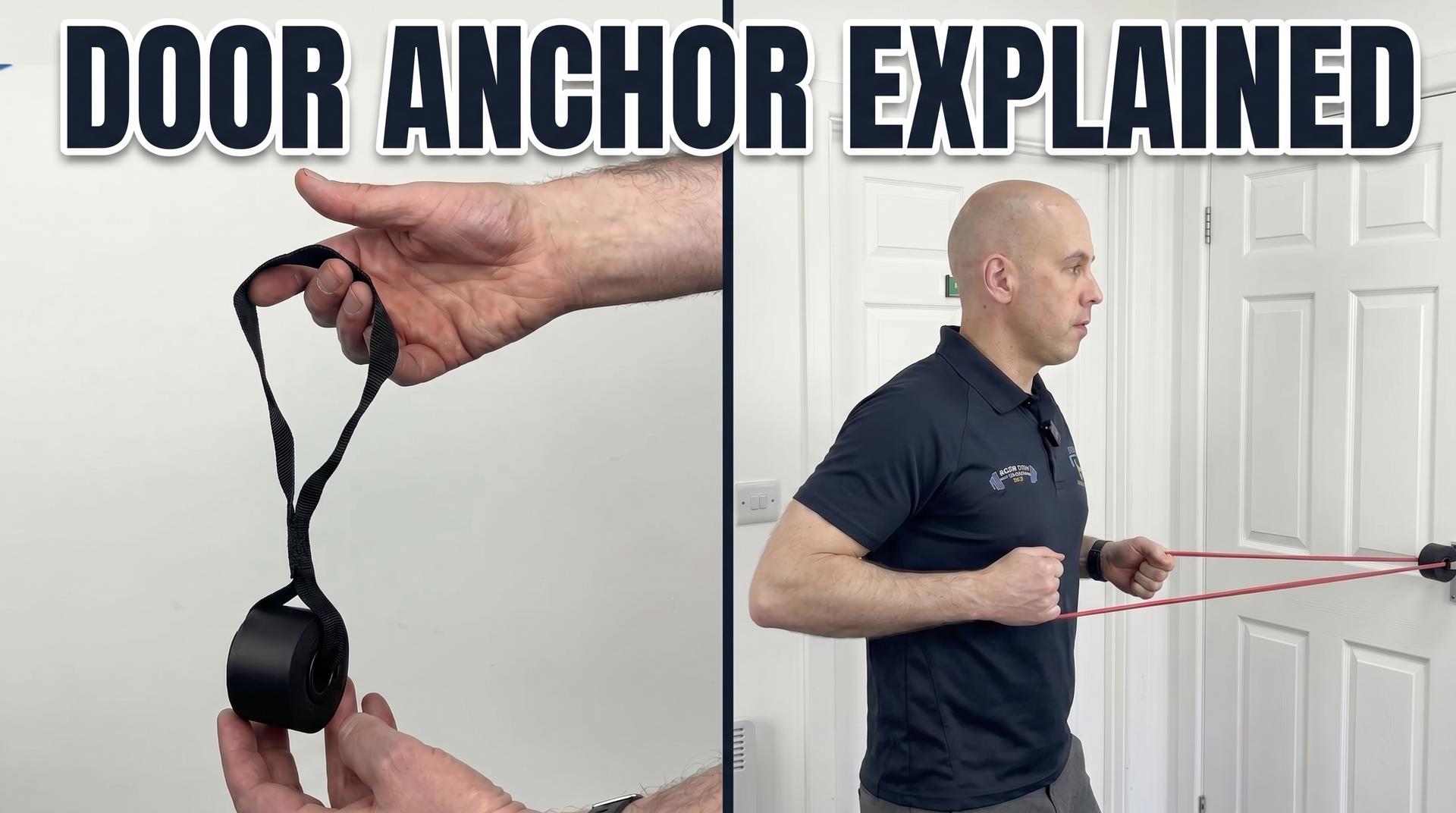
If you have got a set of resistance bands sitting in a drawer somewhere, there is a good chance a small foam and nylon door anchor came with them. It rarely gets used, but it genuinely unlocks a much wider range of full-body exercises at home, particularly for movements that are otherwise difficult to do without proper gym equipment.
Why a Door Anchor Matters
Of the seven functional movement patterns (squat, hip hinge, lunge, push, pull, rotation, and gait), pulling is the one most people neglect at home. It is also one of the patterns that tends to weaken fastest with age, since daily life gives us far fewer opportunities to pull against resistance than to push.
A door anchor solves this directly, giving you a stable, adjustable point to pull against without needing a cable machine or a training partner. Regular strength training like this is something the NHS recommends at least twice a week for adults of any age.
Don’t already have a door anchor? You’ll find one on my recommended equipment page.
How to Position Your Resistance Band Door Anchor
There are two simple ways to set this up:
Over the top of the door. Close the foam stopper on the inside of the door at the top, then let the strap hang down on the other side. This works well for chest exercises and rotational movements performed standing.
Along the side of the door frame. Close the foam stopper into the door at whatever height you need, then close the door itself. Sliding the strap up or down before closing lets you set the anchor at any height, low for hamstring or leg work, higher for rows or chest presses.
Safety First
Two rules matter more than anything else here:
- Always pull in the direction that closes the door into its frame, never in the direction that would pull it open. If your pulling motion is trying to open the door, the anchor is on the wrong side.
- Thread the anchor through the hinge side of the door whenever possible, not the handle side. If someone else in the house opens the door while you are mid-exercise, an anchor on the hinge side is far less likely to suddenly release or fling the door open.
Take a moment to test the anchor with a gentle pull before loading it with a full exercise, just to confirm it is secure and the door will not give way.
How to Attach Your Band
You have two options depending on the exercise:
- Loop it in half through the anchor for equal resistance on both ends, useful for two-handed exercises like rows.
- Tie a simple slipknot through the anchor when you only need one end of the band free, useful for single-arm work.
5 Exercises to Try
Start with a band tension and rep range that lets you complete each set with good form. Two to three sets of each is a sensible starting point.
Standing Row
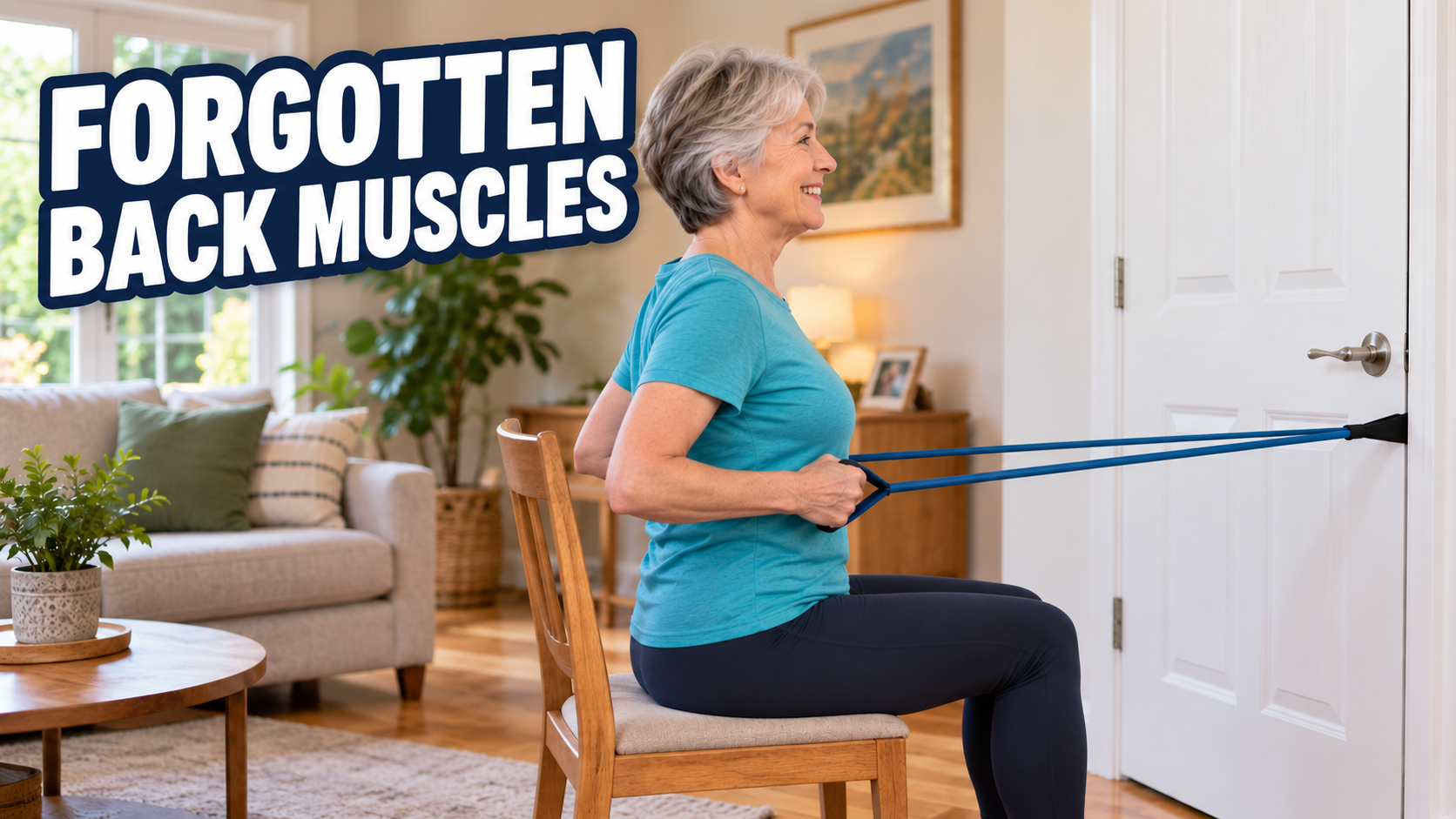
Anchor the band at chest height, step back until you feel tension, and pull both handles back towards your ribs, squeezing your shoulder blades together at the end of the movement.
Single Arm Chest Press
Anchor the band behind you at chest height, and press one arm forward at a time, keeping your core steady so your torso does not twist as you press.
Trunk Rotation
Anchor the band at roughly waist height to your side, hold both hands together in front of you, and rotate your torso away from the anchor point in a controlled motion, then return.
Seated Hamstring Curl
Anchor the band low, near the floor, loop the free end around your ankle, and curl your heel back towards your body while seated.
Seated Knee Extension
Anchor the band low behind you, loop it around your ankle, and straighten your knee out in front of you. Twisting the band into a figure-eight over your foot before you start helps stop it slipping up your leg mid-set.
A Simple Next Step
If you enjoy training with the door anchor, suspension trainer straps use the same anchor point and open up an even wider range of bodyweight exercises. Worth exploring once you are comfortable with the basics above.
The GoTone Pro also connects to the same door anchor, giving you smooth, adjustable cable resistance rather than a band. I’ve written up my full thoughts on it in my GoTone Pro review if you want to see how it compares.
For more ways to build pulling strength into your week, have a look at the 8 resistance band exercises to do at home, or if you are just getting started with strength training more broadly, grab my free strength training guide to build a proper foundation first.
New to Strength Training?
Grab my free strength training guide and get started with a clear, simple foundation, no gym experience needed.
Want More Tips Like This?
The Never Too Old to Lift podcast covers strength training for adults over 60 every week, practical advice you can actually use.
Outgrown Resistance Bands?
The GoTone Pro gives you smooth, adjustable cable resistance from the same door anchor. Use code NTOTL for 10% off.
Want Support Along the Way?
Join Stronger for Life for weekly group calls, form feedback, and a community that understands what it’s like to start strength training later in life.

6 responses